
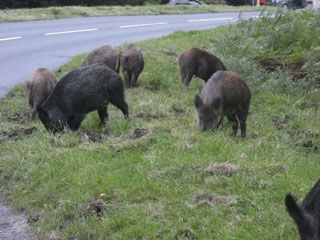
Not so wild boar have attracted plenty of attention from Gazette readers in the last few days. One reader took photographs and sent a letter to the Gazette warning people about the dangers of feeding them. Another reader told of their fear when boar approached a picnic area in the Forest.


The Forestry Commission has issued advice on what to do if encountering boars: not approaching the animals, not feeding them (the fact that people give them food is one reason they have become less afraid of humans), keeping dogs under close control and avoiding dense undergrowth which might contain nesting sites.
In Britain wild boar were hunted to extinction in the 13th century. They were reintroduced in the 17th century, but were considered a pest in the increasingly agricultural landscape, and hunted to extinction again. But from the 1980s, when boar farming began, populations have sprung up in various parts of the country, including the Forest of Dean and areas around Ross possibly owing to boar escaping from the farms, although it has also been rumoured that there was a deliberate release into the wild.
For some people, boars are an exciting wildlife spectacle, and an adult boar is one of the largest completely wild animals to be seen in the UK and for people in the Forest, boars have become an everyday sight, and the evidence of their activity on the verges of many roads is clear.
It was known there were boars in the area for some years, but there were initially very few sightings. However, the animals have increasingly come in to contact with humans, which could be a matter of concern.
Comments
This article has no comments yet. Be the first to leave a comment.