

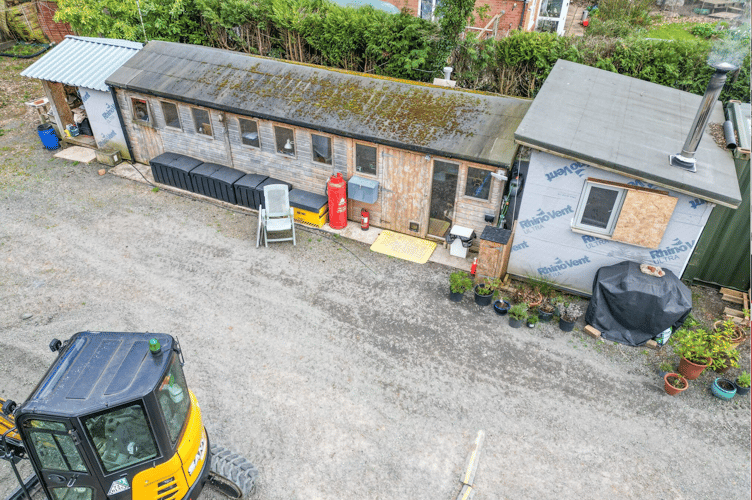
A COUPLE have been stuck living in a garden shed for the last four years after their plans to build their dream £370,000 eco-home were blocked by pollution in a Wye tributary 12 miles away.
Jane Coyle, 64, and her husband Anthony, 67, submitted plans to build a three bedroomed eco-home within a woodland setting in picturesque Edwyn Ralph after selling their Ross-on-Wye farmhouse.

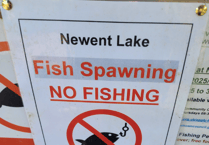

However the project was hit by the county’s ‘Lugg Moratorium’ – which has held up multiple developments in parts of the area for many years due to high level of phosphates in the River Lugg.
As a result, the pair have been forced to live in a 6m (19ft) x 3m (9ft) garden shed next to their unbuilt 250sq m property after planning permission was blocked until only last year.
The couple are now part of the biggest-ever environmental lawsuit in the UK after the building ban, imposed to prevent further nutrient pollution, blocked the development of around 2,000 homes.
Legal firm Leigh Day have filed a claim on behalf of 4,500 people who say they have been affected by the pollution in the Wye catchment.
Jane and Anthony had sold their six-bedroomed farmhouse in Ross-on-Wye before buying the land £120,000 where they planned to spend another £250,000 constructing their forever home.
Mum-of-three Jane, who works in property sales, said: “We are all for protecting water courses but we have been stuck living in out shed through no real fault of our own.
“We bought the plot of land off a man who had permission to build a four bedroomed bungalow in 2018 and submitted planning permission for our design in 2020.
“We worked with an architect on the design, which is economically friendly and reflects the woodland setting we’re based in using timber materials.
“We were assured by our planning officer it wouldn’t take long, around eight weeks, and knew nothing of this moratorium September 2020.
“I remember someone locally in a similar permission saying it might take them seven years before they would be allowed to build. I laughed it off – but they weren’t far off.
“The crazy thing is if we had we been a couple of fields away, we would have been ok. Houses three quarters of a mile up the road have been getting permission to build all this time.
“So since 2020, we have been stuck in limbo unable to start out build. We moved into a static caravan on the site and then moved into the garden shed in 2022.
“It had been serving as storage for our belongings, as a bit of a cupboard and a workshop but we couldn’t face living in the caravan any longer.
“We’ve now got a log burner in there, its fully insulated and we have a shower room and kitchen area. But when our children come to visit they have to stay in camper vans or teepees.
“They had us on a technicality and we feel really let down as this is people’s lives they are playing with. This was supposed to be our forever home.”
The couple have not been able to put up a Christmas tree since before the Covid pandemic and kept “all” their “worldly goods” in a storage unit outside the shed.
They were granted planning permission in 2025 following the purchase of ‘phosphate credits’, which will help offset the effects of development by funding a wetlands project.
Some developers were permitted to purchase the credits to offset sewage from property built in the area – but the costs can run into thousands of pounds for some, included Jane and Anthony.
Jane added: “We still have to pay off £7,000 of these phosphate credits before building can start. But the amount of phosphate we produce could fit in a test tube while you’re watching acres and acres around you being covered in chicken slurry.
“This has been the issue – there are chicken farms all along the Herefordshire/Welsh border and they keep getting permission for more and more chickens.
“This leads to more chicken effluent and slurry being pumped into surrounding farmland.
“New homes are a tiny fraction of the problem and we are part of the legal action which is seeking compensation for what we have endured.”
But Mr Coyle’s health has hit their building schedule, while the delay has resulted in “astronomical extra costs” including having to install solar panels and battery storage.
They said they keep having to apologise to neighbours about their property’s appearance, while security concerns have left them unable to leave for extended periods of time.
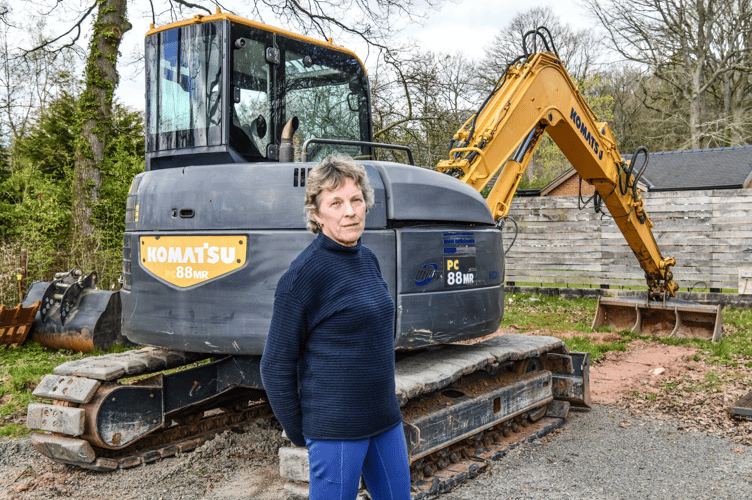
Jane added: “Now we finally have planning permission my husband has been too unwell to do the work so it’s a bit of a dumping ground with a digger there at the moment.
“We now face having to pay £400,000-£500,000 on paying a professional builder to do the work we were going to do ourselves years ago
so we will be significantly out of pocket.”
Legal firm Leigh Day has now filed a claim on behalf of 4,500 people who say they have been affected by river pollution.
They say the Lugg Moratorium building ban has blocked the development of around 2,000 homes.
The case is the biggest-ever environmental lawsuit in the UK, with action taken against poultry producers Avara Foods Limited and Freemans of Newent Limited, and utility firm Welsh Water.
The law firm alleges chicken farms produce 66 per cent of the nutrient pollution blocking development, whereas new developments account for less than one per cent.
The legal action claims that water run-off from farmland treated with poultry manure, as well as sewage discharges, have led to severe contamination of the waterways through high levels of phosphorus, nitrogen and bacteria.
The pollution is said to have triggered algal blooms, fish deaths and strong odours, damaging tourism, recreation and property values since 2019.
The claim is the largest of its kind in British history, in terms of the number of claimants.
Oliver Holland, partner at Leigh Day, said: “The concerns of people impacted by the Lugg Moratorium are something we echo, and with the legal claim we will look to hold those allegedly responsible to account.”
A Welsh Water spokesperson said that, as a not-for-profit company, the amount it can charge for services is regulated and this limits funds for infrastructure investment.
They said: “In the past five years we have delivered £70 million of investment to improve our sites on the Wye River.
“Unfortunately, the water pollution caused by other sectors during this period has increased significantly, reducing the overall impact of the water quality improvements we have achieved.”
They said they intend to defend the case “robustly”.
A spokesperson for Avara said the company has “done more than any other poultry business to respond to concerns and to support efforts to develop understanding on the complex subject of river health”.
They said there are “no scientific studies, or data, that identifies Avara Foods or even our wider supply chain as a cause of the river’s condition”, adding that academic studies have highlighted other contributing factors unrelated to Avara.
A spokesperson added: “No manure is stored or spread on poultry units that supply Avara Foods and where poultry manure is used as fertiliser, it is for other produce in other agricultural sectors.”
They said individual farmers are responsible for how nutrients are used in their arable operations and for compliance with the regulations that govern its use.
Comments
This article has no comments yet. Be the first to leave a comment.