

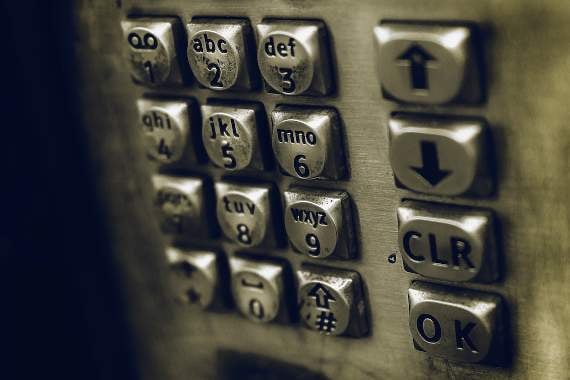
Tributes have been paid to the telephone operators who receive the thousands of emergency calls made every day.
Eighty years ago, after a fire in a London doctor’s surgery in November 1935, which led to the tragic death of five women, the 999 number for emergency calls was introduced.
Colin Bannon, chairman of BT’s West Midlands regional board, said: “Recent events in the UK mean people are acutely aware of the work of the emergency services and the value of the 999 service. I am extremely proud of the BT operators and their role in 999.
“They are a highly competent team working at the sharp end of the most important communication services in the country. In the region countless lives have been saved over the last 80 years because of their professionalism and dedication.”


A government committee which was set up in 1935 to look at the problem of how telephone operators could identify emergency calls proposed a standard easy-to-remember nationwide number to alert the emergency services - and 999 was chosen as the most practical number.
The Second World War delayed the rollout of the service across the UK, but it was eventually extended to all major towns and cities by 1948, with Birmingham and Coventry two of the first cities outside London to introduce the 999 service.
More than a thousand calls were made during the first week of the service in London in 1937, with each 999 call triggering flashing red lights and hooters to alert operators in the exchange to give priority to the emergency call. The hooters were apparently so loud that the operators pushed a tennis ball into the horn to reduce the volume until modifications were made.
Hoax or unnecessary calls were a feature of the 999 service from the very beginning, including a complaint about bagpipes being played outside a house and a dispute between a neighbour and the local coalman.
BT advisors now answer around 560,000 calls a week in the UK – including about 47,000 in the West Midlands. Of around 30 million calls received a year from fixed and mobile phones, more than 97% are answered within five seconds. The early hours of New Year’s Day is traditionally the busiest time of the year when up to 9,000 calls can be received each hour.
The latest development in the 999 service is Advanced Mobile Location (AML), a new mobile location system, pioneered by BT, to pinpoint 999 calls from mobiles more precisely. When an emergency call is made with an AML-enabled smartphone, the phone automatically activates its location service and sends its position in a text message to the 999 service. AML is up to 4,000 times more accurate than existing location systems. It is now integrated into the Android operating system in the UK and is being adopted across Europe and the rest of the world.
Around 35% of the 30 million calls answered by BT each year do not involve actual requests for help. The majority of these are made by children playing with home phones or people accidentally dialling 999 or the European emergency number 112, often from a mobile handset in a pocket or handbag.
The proportion of calls connected by BT to the various emergency services is: Police - 49%, Ambulance - 47%, Fire and Rescue Service - 4% and less than 1% to the Coastguard and Cave and Mountain rescue services.
Comments
This article has no comments yet. Be the first to leave a comment.