

Work is currently underway in Much Birch to establish a Good Neighbour Scheme, whereby residents in the village volunteer to help those who are lonely and/or isolated.
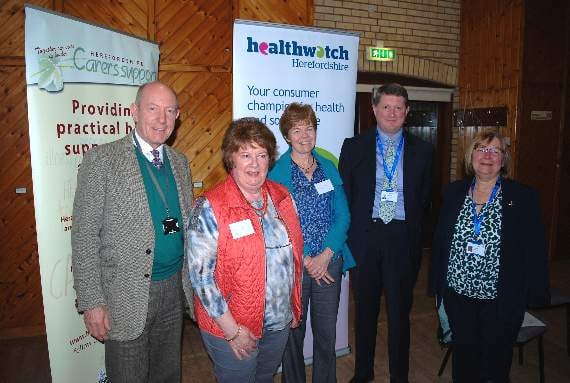
Residents interested in finding out more about the Good Neighbour Scheme (GNS) attended a meeting at Much Birch Village Hall earlier this month.
At the meeting, attendees were told about the effect that loneliness could have on a person’s health, and the possible effects can be as detrimental as moderate smoking.
Christine Pepler, from the Diocese of Hereford, told the meeting that government budget cuts to local authorities has already had an effect on the public services, notably the NHS, and with austerity likely to deepen, she said that communities needed to support each other and take charge of their own lives.
She added that loneliness can have a lot of stigma attached to it, so people may be reluctant to admit that they are lonely, which can lead to negative thoughts, depression and low self-esteem.
Ms Pepler added that the GNS?can be an effective way to combat the effects loneliness can have, as it should reduce the stigma around asking for help. She added that the schemes do not cost much to run or set up.
The Good Neighbour Schemes each have a co-ordinator, who takes requests for help from people. The co-ordinator will have a list of volunteers and delegate a help request to one of them, based on what help the volunteer has said they are prepared to offer.
The schemes have many benefits. For one, they help to alleviate loneliness and further improve links within a community, but they can also help reduce demand on local health services.
A familiar face to many Much Birch residents, Dr Dominic Horne, was another key speaker at the meeting.
Dr Horne is Clinical Vice Chair of the Herefordshire Clinical Commissioning Group. He explained that a draft sustainability and transformation plan (STP) is currently being put together, to allow the local health services to come up with a strategy to cope with the increased demand and reduction of government funding.
As a result, in Herefordshire, the organisations responsible for health and social care services are prioritising safety, preventing ill health and promoting self-help, for example encouraging people to make healthy life choices.
It is recognised that Herefordshire has strong communities, so it is hoped that by establishing Good Neighbour Schemes, residents will have links to better care for one-another.
Jane Rigler is the co-ordinator of a successful Good Neighbour Scheme that operates in Orcop, Wormelow and Llanwarne, nicknamed ‘OWL’.
Ms Rigler worked as a nurse for 44 years, but she is now retired. After she attended a conference on loneliness in Hereford, she was shocked to discover that people are more likely to admit to be mentally ill, and less likely to admit if they feel lonely, so she decided to do something to help those in her community who feel isolated.
She approached her Parish Council, and a local magazine, who each gave her some funding. HVOSS, the Herefordshire Voluntary Organisations Support Service, gave advice for the practical side of the scheme, for example, with insurance, bank account and bookkeeping.
The OWL Good Neighbour Scheme was launched in May 2016, and ever since, has been going from strength to strength. Ms Rigler said that a lot of the work involves the volunteers helping the clients with transport, for example, driving them to and from Hereford County Hospital.
The Good Neighbour Scheme is supported by Much Birch Surgery, the Diocese of Hereford, Herefordshire Clinical Commissioning group, and Herefordshire Council.
Comments
This article has no comments yet. Be the first to leave a comment.