

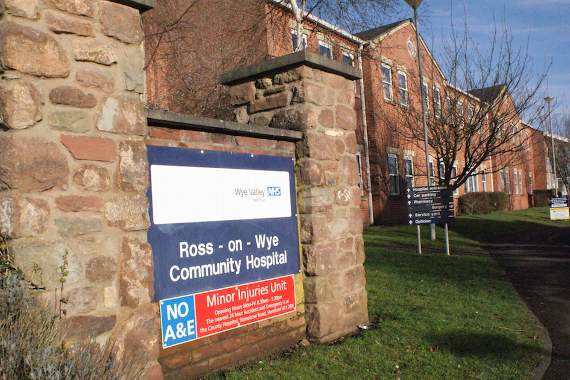
Strict infection control measures have been reinforced across hospitals in Herefordshire, following patients contracting the Norovirus from visitors.
The Norovirus, a highly contagious virus, has caused the closure of three hospital wards in the last two months at Wye Valley NHS Trust, and there are also current outbreaks in the Herefordshire community.
Each hospital patient case of Norovirus has been investigated by the Trust and the outbreaks have been linked to visitors who attended hospital whilst contagious with the virus.
Alison Johnson, consultant microbiologist at Wye Valley NHS Trust, said: “We understand the importance of visits from family and friends for patients who are staying in hospital.



“However, anyone visiting hospital, or attending an appointment, with symptoms of sickness or diarrhoea now or in the last 48 hours is placing patients at risk of a highly contagious virus.
“We have identified a link between the Norovirus outbreaks in our hospitals during March and April this year, which could have been prevented if these visitors had followed our infection control measures.
“There may be people that are not aware of how easily Norovirus is spread or the affect it can have on patients who are acutely unwell. It is very unpleasant to acquire Norovirus in hospital when you are already ill for another reason.
“These outbreaks also affect staff who may contract the virus and be unable to work for several days. Outbreaks can require a full closure of the ward for a number of days. The impact of the virus affects emergency admissions and often means that routine operations have to be postponed at short notice.
“We are sending out a strong message not to visit hospital, or attend an appointment, if you have symptoms of sickness and/or diarrhoea now or in the last 48 hours, in order to protect every patient.”
Dr Ian Tait, GP, Chair and Clinical Lead of Herefordshire Clinical Commissioning Group said: “There are Norovirus outbreaks and cases in the community at the moment and we continue to see higher than normal numbers of cases, for the time of year, regionally. These outbreaks can affect hospitals, care and residential homes and community facilities such as child care centres.
“You can get Norovirus from an infected person, contaminated food or water, or by touching contaminated surfaces. It is very easily spread. The virus causes your stomach or intestines or both to get inflamed. This leads you to have stomach pain, nausea, and diarrhoea.
“We’re urging everyone to take extra precautions to avoid bringing the virus into any care or health setting, or schools, and help to protect patients and staff.
“If you are visiting a loved one and you don’t have Norovirus symptoms, remember to use the alcohol hand gel provided in hospital or handwashing facilities in care and residential homes to help prevent the spread of the infection.
“If you do have diarrhoea and/or vomiting you must stay away from hospitals, work or school, for at least 48 hours, after your symptoms have settled. After 48 hours you will no longer be contagious.”
There are some simple steps that the public can take to help stop Norovirus spreading:
• Wash your hands frequently and thoroughly with soap and warm water, particularly after using the toilet, and before preparing food. If you’re in an NHS facility pay attention to hand hygiene notices such as using hand gel upon entering and leaving a ward.
• Disinfect any surfaces or objects that could be contaminated with a Norovirus. It is best to use a bleach-based household cleaner. Always follow the instructions on the cleaning product.
• Flush away any infected faeces or vomit in the toilet. You should also keep the surrounding toilet area clean and hygienic.
• Wash any clothing, or linens, which could have become contaminated with a Norovirus. Washing with hot, soapy water will help to ensure that the virus is killed.
• Although people usually recover without treatment in 24-72 hours, it is important to stay away from work, school, college or any social gatherings until you have been free of symptoms for at least 48 hours.
Comments
This article has no comments yet. Be the first to leave a comment.