

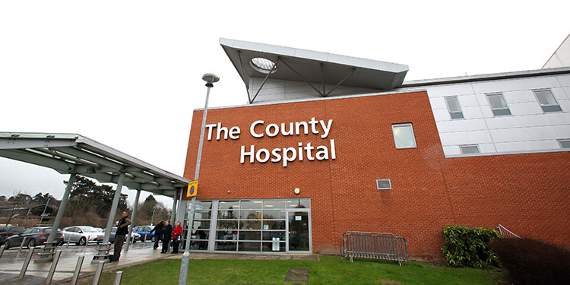
An innovative local study into the effects that angina can have on farming families is helping shape the way Hereford County Hospital, and hospitals across the UK, care for their more rural patients.
Cardiac Rehabilitation Practitioner Dr Stephen Heptinstall recently completed the research, called the Farm Angina Project, in collaboration with Wye Valley NHS Trust and the University of Bath.
Its findings will not only influence how Wye Valley NHS Trust cares for farmers with angina, they will also be used nationally to improve the way care is delivered to members of farming communities across the UK who are diagnosed with heart problems.
“This aim of this research was to better understand the experiences of local farming couples when one spouse develops heart disease, said Dr Heptinstall.

“This was done in response to a national plea to ‘rural proof ‘care services, as well as introduce a new programme for those suffering from angina,” he added.
During the period of a year Dr Heptinstall followed the lives of eight Herefordshire farming couples where the man had been diagnosed with stable angina pectoris.
Stable angina pectoris is the medical term for chest pain or discomfort due to coronary heart disease and occurs when the heart muscle doesn’t get as much blood as it needs.
“The study showed how partners also suffer when their spouse develops heart problems.
“There were a number of reasons given by the women; the first being their obvious concern for their spouse’s health and welfare while out on the farm, next were more pensive worries about their future prosperity, including that of the farm.
“Thirdly, the women found that they were suddenly called upon to do more, sometimes on the farm, as well as the family care-giver. This put an added strain upon them as many of the women worked off the farm,” said Dr Heptinstall.
He added that the medical care that the men received often did not extend to supporting the women and, in some cases, added to their sense of suffering.
“This could be due to the fact that they were not being spoken to on the ward and were left in clinic waiting rooms while their husband was being seen. This all added to partners’ uncertainty and a sense of not being trusted.
“This lack of inclusion felt contradictory to the women’s expectations, as carer and spouse, and increased their own personal suffering as they tried to uphold a caring role with no obvious support or acknowledgement, while also trying to come to terms with their own disrupted lives.”
In some cases, this was re-enforced by the men, who did not want their wives to accompany them during medical consultations.
“A lack of acknowledgment or support for this role took its toll on a number of the women. It caused relationship issues and two fell ill with very similar symptoms to those of their husbands. Fortunately it was found that they did not have heart problems.
“The Farm Angina Project has contributed to a better understanding of the lived experiences of farming couples with heart disease and helped to highlight the often silent plight of partners.
“From a practical perspective, the cardiac rehabilitation team at Hereford County Hospital has begun to shape its care to better serve hard-to-reach sections of its community, such as farming families, based on the study’s findings.
“As part of this process partners are now encouraged to attend cardiac rehabilitation sessions with their spouse and to be open about their own personal feelings during these meetings.
“As the research has shown, when mutual support was beneficial, it held the unity of couples; however, when lacking or there was a mismatch in support offered or received, this appeared to add to the strain couples experienced, in the face of illness,” added Dr Heptinstall.
The cardiac rehabilitation team now encourages couples to communicate more openly with each other when illness strikes, and stresses that they should each learn to share vulnerabilities rather than hide them.
By doing it is envisaged that they will cope more effectively as a couple with ill-health and also suffer less as individuals.
“These findings are already being put into practice here at Hereford County Hospital and are being considered by colleagues across the country.
“Our farming communities play a vital role, particularly in a county like Herefordshire, and we’re determined that we should be able to give them the best care and treatment we can.
“I’d like to pay tribute to those who took part in the research – their openness and honesty is helping the NHS treat fellow farmers with heart disease in a much more caring and understanding way,” said Dr Heptinstall.
Comments
This article has no comments yet. Be the first to leave a comment.