

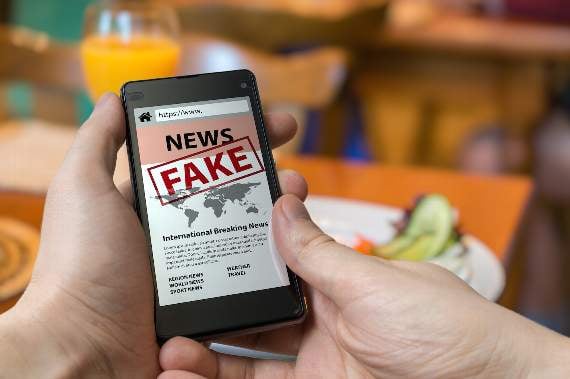
Reportedly, only one in 50 children can spot ’fake news’ stories. The National Literacy Trust found that when 2,200 pupils aged eight to 16 took a fake news quiz, only a handful were able to spot all the fabricated stories.
Dr Lisette Johnston, who used to be the BBC World News boss and is now Head of School at ScreenSpace, shares her top tips on identifying when we are being fed fake news.
Check the source – Look at the publication or site and look at its other stories – try to think critically, consider whether there is any other questionable content.
Check the date – Sometimes a story from years ago can be re-run to give the impression of ‘new’ news.


Do your own research – Check whether the story has been run on other sites, if so, how is the story presented?
Read beyond the headline – Some publications and websites use sensational headlines as a way to encourage you to ‘click’ on the story, this is called ‘click bait’. Sometimes the actual story bears no resemblance to its headline.
Research the writer – If the article has a writer’s byline - Google them to see what other articles they’ve written.
Check the facts – There are some great fact-checking websites such as: https://fullfact.org and https://www.snopes.com/fact-check/ to use when you’re really not sure about a story, whether it’s a statement from MPs or a piece from other organisations.
But also ask yourself these three questions:
• Can the statement be proved or demonstrated to be true?
• Can the statement be observed in practice or operation?
• Can the statement by verified by witnesses, manuscripts, or documents?
Comments
This article has no comments yet. Be the first to leave a comment.