
Martha Ann Colman has recorded her memories of growing up in Foy and the Ross Gazette shares a few with other readers.
After leaving Grammar School Martha began a Senior Secretarial Course at the Technical College in Hereford and would travel by train from Backney Holt.
The train collected passengers from Fawley, Ballingham and Holme Lacy Stations. There was a tunnel shortly after Ballingham Station. The whole rail journey passed through beautiful countryside and when the River Wye was in flood it felt like riding through a sea of water, as the floods would spread each side of the railway line in some areas.
One of Martha's happy memories of returning home to Foy was the greeting she received as she pedalled her bicycle down towards the farm. The farm cats and dogs would come rushing up the road to meet her.

During the 1940s there were about two buses to the area a week, which came as far as the Brickend Cottages in Foy to collect the women who wished to travel to Ross to do their weekly shopping.
Ingestone farm consisted of 400 acres and the farming was mixed arable, with dairy and beef cattle, together with grain production and sheep farming. One field was called 'The Hop Yard' which indicated that hops had been grown in past years and the old hop kilns were evident.
When Martha's step-father originally took over the farm at Foy he also took over approximately 20 working horses. Her step-brother John told her that one of his especially pleasant teenage memories was learning to plough with a horse, but farming methods advanced with the use of tractors.
Martha's brother, John Henry Roberts, became a well-known figure in the Ferguson tractor manufacturing business. He related various meetings he had had with Harry Ferguson when he worked as Overseas Manager, travelling and working in Yugoslavia, India and Italy.
Although he did not live at Ingestone, he visited frequently with his wife, Jean, and family. He amazed some of the neighbouring farmers when he flew a small Tiger Moth plane down to Herefordshire and landed on the river meadows at Ingestone.
Martha's step-brother John talks about the vast quantity of grain produced on the farm, including wheat and barley. The very large stone barn and granary were used to store the grain. Rate of production was increased with the arrival of the first combine harvester.
It was a great pleasure to carry picnic teas to the men involved in the busy, dusty work of collecting in the harvest. They were very grateful for the refreshment of sandwiches, fresh scones, cakes, flasks of tea and lemonade.
John was very involved in the running of the farm when he left school and became responsible for the management of the large milking herd. Initially this was a herd of mixed milking cows, but later progressed into a full Friesian herd, milking about 30 cows a day. The milk was collected by lorry each day and transported to the Cadbury milk factory near Leominster.
One of the main crops on the farm was sugar beet, approximately 30 acres was grown each year. Some of the crop would be taken by rail from Backney Holt Station and a large number of loads would be driven from the farm up to the sugar beet factory at Kidderminster. After the processing of the beet at the factory the residue was known as 'tailings' and some of the farmers would bring a load back for animal feed.
Martha remembers one year a huge hare shoot was held with the neighbouring farmers assisting. At the time she felt sad to see such a happening, but realised that the crops were important to the farm.
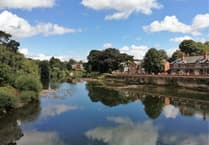
Foy was a wonderful area in which to experience the country way of life. The river area was home to swans, moorhens, kingfishers and the lush countryside was full of blackbirds, thrushes, robins, sparrows, pigeons, jackdaws, and the occasional pheasant would arrive flying down from the Perrystone estate. There were barn owls and rooks arguing in their nests high above the barns in the old elm trees. Sadly, due to Dutch Elm Disease, practically all the elm trees disappeared.
I feel very privileged to have lived in the Parish of Foy all those years ago and it is good to know that preservation and protection of such a beautiful part of the Wye Valley is being encouraged.
Comments
This article has no comments yet. Be the first to leave a comment.