

Lambing is the busiest time of year for sheep farmers, and the months before the new arrivals are born can often be just as crucial as lambing-time.
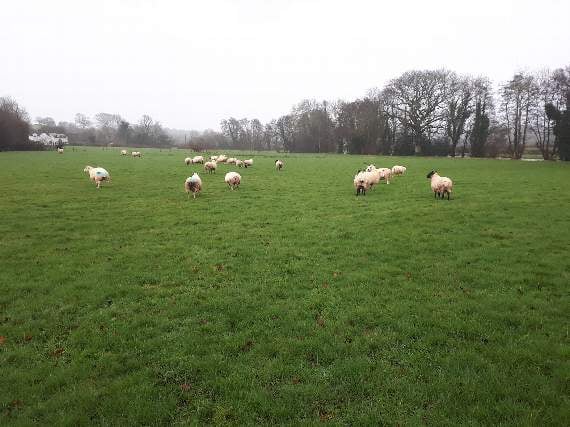
Preparation for lambing is vitally important to ensure that when spring comes round and the jobs and tasks start to mount up, you have everything organised for the many eventualities and situations that will inevitably arise. In the winter months, farmers and their stock are often left to the mercy of the Great British weather. For this reason many farmers with smaller acreage, will move their stock to different land through winter keep. Winter keep involves moving stock to other farmers’ land as to allow the grass on your land to rest and recover during the wet winter months and to ensure a plentiful supply of grass is available when stock return for lambing.
Dairy farms are popular choices for winter keep, as with dairy cows moving inside to be housed in the winter months, the land is often free for other stock to use. Cows are lighter-grazers than sheep and will leave more grass than sheep, who have to be moved frequently when grazing fields.
Farmers using winter keep will pay rent to the farmer who owns the land through a payment per head of stock as well as the duration of time they will be grazing the land.



In the months before lambing it is important to maintain the health of the flock not only by providing them with plenty of grass and other feed but also ensuring they receive minerals and nutrients. Mineral buckets are an important source of energy for sheep and are needed to maintain body condition at a critical time before lambing.
Scanning usually takes place eight to ten weeks prior to lambing and is the first indication of how an upcoming lambing season should unfold.
Contractors with specialist ultrasound scanners visit farms and carry out scanning. An efficient scanner, with a good set-up can do up to 100 ewes in an hour, at around 50p per ewe, it really is money well spent, as savings can immediately be made by accurate feeding according to the number of lambs carried. Scanning is useful for farmers in helping split a flock in the build-up to lambing. Ewes carrying twins and triplets will need greater attention and care, as well as increased amount of food.
The ewes on our farm are usually scanned a month or so prior to returning from winter keep and when returned are split, with the singles separated from the twins and triplets, as to allow us to manage their feed adequately according to the number of lambs they are carrying.
I have known ewes carry four lambs at one time, but as it is difficult for a ewe to feed more than two lambs successfully, the third or fourth lamb would be moved to a ewe which had only had a single lamb.
Comments
This article has no comments yet. Be the first to leave a comment.