
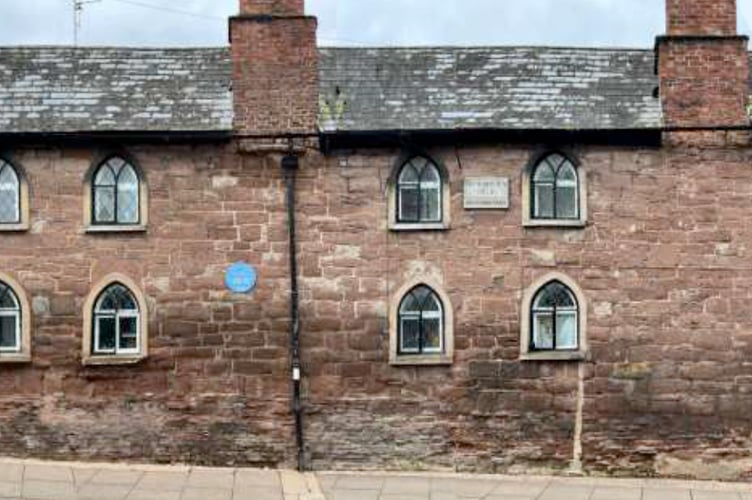
HEREFORDSHIRE planners have given the go ahead for a range of seven historic tenements in Ross-on-Wye to be restored to ensure their continued contribution to the character of the town.
The Webbe s Almshouses in Copse Cross Street were originally built in 1612 - thanks to Thomas Webbe, a successful carpenter, who endowed the seven tenements to house seven people in Ross, but in all likelihood, it became home to seven families.
And now the owner of the Grade II listed building is seeking permission from Herefordshire Council for listed building consent to carry out restoration works to the principal facade of the almshouses.
However, Herefordshire Council’s historic buildings officer initially became concerned over the amount of replacement of stone being proposed and said it was far in excess of what is required.
The officer suggested that no stone should be replaced above the level of the ground floor window sills and said that all cementitious pointing should be cut out and where there are open joints they should be repointed to an approved lime mortar mix.
The application stated that the building was last restored in 1963 and that the proposed repair works will respect the historic significance of the terrace by using materials and methods appropriate to the building’s age and construction.
Rhys Bennett of RRA Architects, the agent for the applicant, said that the proposed works would secure the building’s long-term future and added that all existing ridge tiles will be carefully inspected for signs of cracking, displacement, or loss of bedding and that any ridge tiles found to be damaged, loose, or missing will be removed and replaced with salvaged tiles to match the existing.
Planning officer Heloise Hardwick said that the impact of the proposed works to the historic fabric of this Grade II building, and its setting, required significant consideration.
“Webbe’s Almshouses is recognised for its architectural and historical importance within Ross town centre as it makes a significant contribution to the character of the townscape and offers a strong street presence,” she said.
“In this regard, the proposed amended works are deemed to be sensitively and appropriately designed and would not result in any undue harm to the historic fabric of the heritage asset and therefore the application is recommended for approval.”
This building in Copse Cross Street along with the Tudor-fronted Rudhall Almshouses in Church Street, both retain their mediaeval street plans and burgage plots.
● Thomas Webbe, in his will of 13th July 1612, gave £800 to be allocated as £100 to purchase and erect a 'fit house, soil and place of habitation within the said Borough for seven poor people, each of them to have a several chamber, and a chimney in every chamber', with the remaining £700 to be invested to provide an annual income of £35 'for ever, for the payment of £5 apiece for each of the said seven poor people'.
A blue plaque dedicated to Thomas Webbe was erected on the building in 1985 as part of the mayor’s project to highlight the town’s benefactors.
Comments
We've recently changed our login process. If you have an account for commenting, you will need to re-register on the login window.
This article has no comments yet. Be the first to leave a comment.