

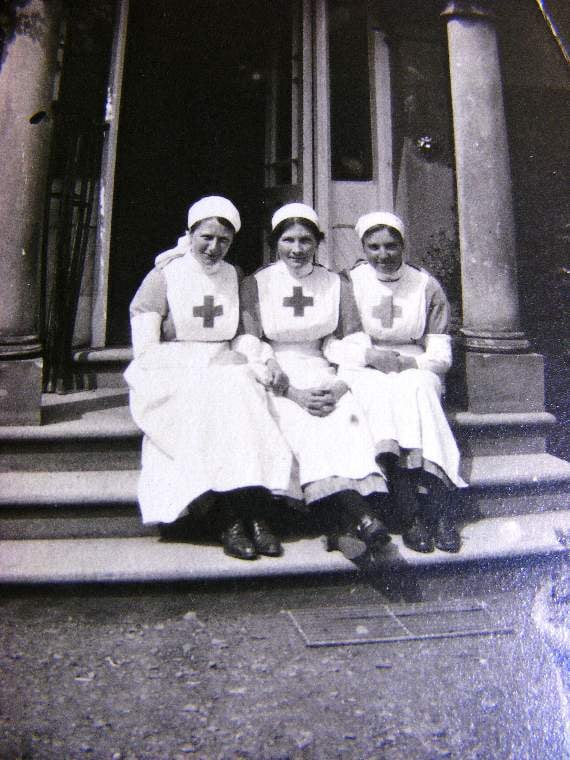
Local readers are set for a treat later this month when a new epic WWI novel, prominently featuring Ross-on-Wye and Bridstow, will be launched at the National Army Museum in Chelsea on September 20th.
Vee Walker’s debut novel, Major Tom’s War, has had an incredible ten-year journey into print due to the amount of research required. It is an epic story of tragic loss, and unlikely love, set during the First World War, as experienced by four people with interconnecting destinies: an Indian Army cavalry officer, a VAD, a mayor in occupied France and a Highland soldier-laird.
Major Tom’s War is based on real people, places and events drawn from the author’s grandfather, Tom Westmacott’s unpublished war diary. And those places frequently include both Ross-on-Wye and Bridstow.
The author’s grandmother, Evie Winnington-Ingram, was born in Bewdley in the late 19th century (the family seat was once at Ribbesford House nearby) but just seven years later her mother died. Her father, Edward, Arch-Deacon of Hereford, moved his family of five children aged between 12 and 4 to Ross-on-Wye where he became the priest. Then he moved to the smaller parish of Bridstow, where Edward and his three spinster daughters, Maud, Ethel (Etty) and Laura Evelyn (Evie) lived at the vicarage, their brothers having both become priests elsewhere.


“These were exceptionally intelligent young women who chose not to marry in order to devote their lives to intellectual pursuits – my great-aunt Etty was one of the first women in the country to receive a First Class Honours degree at the University of London,” explains the author.
‘Major Tom’ is Tom Westmacott, Walker’s grandfather. Tom flees a dark past in Calcutta in 1914 for the horrors of the Western Front. The novel answered the question as to why in 1918, at the (then) advanced age of 33, does Evie agree to his proposal of marriage?
The stirring and intricate plot of this uplifting novel weaves together real events set in India, England, Wales, Scotland, Belgium, Germany and France, including the suffragette movement, the multicultural Indian Army on the Front, executions by firing squad and the retreat from the Somme in March 1918, while offering insights into the strangely cosmopolitan camaraderie and grim humour of the trenches. Major Tom’s War commemorates the Armistice centenary by celebrating the extraordinary capabilities of ordinary people caught up in the upheaval and unimaginable horror of the First World War.See the full story in this week’s edition of the Ross Gazette, or subscribe to our online edition here
Comments
This article has no comments yet. Be the first to leave a comment.