
Madam, The letter from John Jarvis, Cabinet member for the Environment and Strategic Housing in the August 28th issue of The Ross Gazette tells us that, the enforcement of the 1994 enabling clause applied to the restoration of Caradoc Court is unavoidable - the alternative is too expensive.
The enabling clause was, even in 1994, controversial; it has been renewed regularly since then and this parcel of land is consequently valuable. However an alternative site has been offered, failing this surely a brown field site could be found elsewhere where new houses would be welcome?
It was only a year ago that The Court was bought at public auction. A large team of builders moved in and the restoration started... At the same time a team of gardeners was set to work on the neglected garden. I was privileged to be given permission to walk in the grounds and was impressed and interested as the old garden emerged. Paths were dug out and reinstated, gravel laid, Victorian greenhouses restored, a fern garden and a multitude of aconites appeared in the spring. The original planting emerged from a shroud of weeds. An ancient wall which must have been part of much older grounds was cleared.
Of course such an endeavour should be properly rewarded, this is the purpose of an enabling clause.


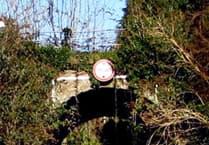

During this time a team of men set to work on the enabling site. No time for attention to flora and fauna: trees were ruthlessly and carelessly lopped, undergrowth cleared.
Unexpectedly this clearance clearly showed that the site had once been part of the pleasure grounds of the old mansion, designed to open a pleasant prospect and walk down to the Church, a viewing promenade.
The clearance also revealed to the people of King's Caple that the new suburban enclave would be clearly visible to them and they became alarmed.
I refer readers to the excellent article in the Hereford and Worc Garden Trust Summer Newsletter no 33, where this important historic Wye Valley site, in the midst of an AONB, with a unique position overlooking Castle Meadows and the River Wye is clearly defined. The conclusion to this article is that an alternative site should be found 'well away from the mansion'.
There is still time to reconsider the building of a suburban enclave in a place that clearly should be protected for posterity. If this planning vandalism is implemented a timeless and cherished bridleway, much used by walkers coming down from Pengethley to the Church and on to the suspension bridge, will be changed for ever. Furthermore the work on restoring The Court and its immediate grounds will be gravely diminished.
Enabling sites should enhance the whole. An alternative site should urgently be found and a unique corner of old Hereford saved and protected for the future.
Mrs S Darling, Sellack