
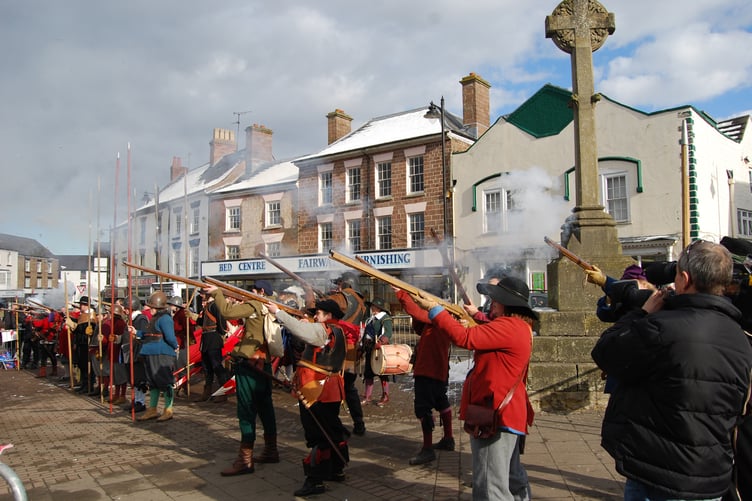
DURING the English Civil War in the mid-seventeenth century, the Forest of Dean was of great importance. It had vital resources of iron and timber.
Strategically it lay between opposing forces or the routes by which Royalists or Parliamentarians needed to move men or supplies and the River Severn provided a line of communication.
In his article for the New Regard, the journal of the Forest of Dean Local History Society, Peter Bloomfield, the former Deputy County Archivist at Gloucestershire Archives tells of how the lives of ordinary people were impacted by the conflict.

Many were killed or wounded in the fighting and both sides used brutal methods to ensure they were supplied with food, munitions, money and other necessities.
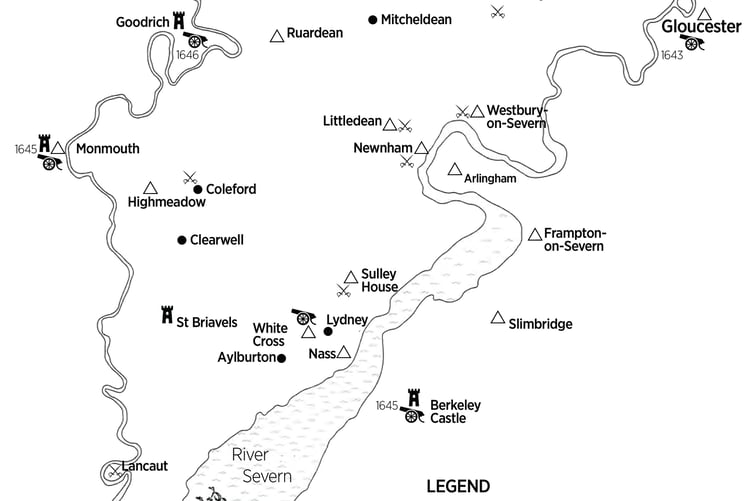
Gloucester stood like a rock for Parliament but at Lydney, Sir John Wyntour led the cause for the King. He fortified and garrisoned his White Cross house and faced Colonel Edward Massey, the Governor of Gloucester and champion for Parliament.
Wyntour aroused opposition locally prior to the outbreak of the war in 1642 by enclosures, which led to the ‘Skimmington Riots’ of 1631. In March 1640, King Charles I – short of money – sold much of the Forest to Wyntour.
He received a grant of all the coppices, woods, ground and waste soil of the Forest (except the Lea Bailey) together with the wood and timber, and all the mines of iron, coal, tin and lead, and quarries of millstones and grindstones, and cinders. The Forest became a very different place from what we know today with the tall trees cut down for charcoal production to fuel Wynour’s iron furnaces.
Wyntour was secretary to Charles’ French Catholic Queen, Henrietta Maria, in 1638. He had powerful connections amongst the Catholic and Royalist cause.

The Civil War war broke out in August 1642 but the Forest was not greatly affected until early 1643. Gloucester had been put on a war footing before hostilities commenced. Its garrison was greatly strengthened when the Earl of Stamford evacuated Hereford and Worcester in December 1642 and arrived in the city with an army that included Colonel Edward Massey.
The predominantly Royalist South Wales was a major recruiting ground for the King’s cause and the power base of Henry Somerset centred upon Raglan Castle. Maintenance of communication between here and the King’s principal field army at Oxford was vital to the success of the Royalist war effort.
In the summer of 1643 Bristol fell to the King’s Cavaliers. Control of Chepstow Castle was fundamental to securing the passage across the Bristol Channel and a crossing over the Wye, as were further north Monmouth, Goodrich Castle and Ross-on-Wye.
In mid-February 1643 Edward Somerset entered the Forest with an army of 1,500 foot and 500 horse. His brother, Lord John Somerset, commanded the cavalry; Sergeant Major General Sir Richard Lawdey the foot. The initial target was Coleford, the base of the newly raised regiment of the Parliamentarian Colonel John Berrow.
The Battle of Coleford was a sharply contested affair, a feature of which was the high casualty rate of Royalist officers, including Lawdey, who were picked off by defenders firing from the windows of the houses. Despite their losses the Royalists prevailed, taking several prisoners and driving off their opponents.
Sir Jerome Brett took over Lawdey’s command and moved on towards Gloucester. The troops halted at Highnam where entrenchments were thrown up to command the Newent, Ross and Forest roads. A command to Massey to surrender the city received a scornful reply.
In late March, Massey and forces under the command of the Parliamentary General Sir William Waller attacked the Highnam position from different directions. The battle of 23 and 24 March saw the largely Welsh troops routed. Well over 1,000 prisoners were led captive into Gloucester and imprisoned in the churches of St Mary de Lode and Holy Trinity. Many of the most powerful gentry of South Wales were taken.
Following his victory at Highnam, Waller made an attempt upon Chepstow Castle but lacked the heavy artillery to take it. The King ordered his nephew Prince Maurice to intercept. With about 2,000 horse and foot Maurice took up positions between Ross and Newnham. Waller, receiving intelligence of what awaited him, sent his foot, guns and baggage across the Severn while he advanced with his horse upon Newnham on the night of 10-11 April.
The Royalist garrison beat a hasty retreat to join Maurice with cavalry drawn up on a hill near Littledean some 200 to 300 strong. Waller had lined a wall below with 200 musketeers, supported by horse. When officers rode down the hill they met with initial success but were beaten off by a volley of musketry from “a stone house”.
Confident that Massey would yield Gloucester, the King came in person in August and established his headquarters at Matson House. But Massey would not surrender. Fearful of heavy losses Charles would not agree to storm the city and his army settled down to a long siege. Relief for Gloucester came with an army led by the Earl of Essex reinforced by regiments of the London Trained Bands. On 5 September the Royalists abandoned the fight.
With reinforcements by early September, Wyntour took the offensive for the King. A few days after the end of the siege of Gloucester he sent a troop to Newnham to protect a ship from Bristol which carried munitions for the Royalist forces; but they arrived too late to prevent them falling into Parliamentary hands.
Wyntour established a garrison in Newnham. This gave him a good base from which to bring pressure to bear upon Gloucester, helped by strong cavalry support from Herbert.
Massey’s horse troops were too late to prevent the Royalists from securing Newnham.
Wyntour ordered a rendezvous of Royalist forces at Coleford. The plan was for them to march on Gloucester and take the city by surprise. Massey. hearing of Wyntour’s activities, sent out troops to secure a house “three miles that way’”. After marching about a mile and a half Crispe encountered some of the Royalists drawn up “in a broad lane near Highnam”. The Parliament men fired upon them killing a captain and four soldiers. The Royalists withdrew.
In November 1643 Prince Rupert was at Newent to unite Royalist forces and press upon Gloucester. In late January 1644 Wyntour captured Huntley, Westbury and Littledean.
Massey was active on the River Severn against Chepstow in which the Royalist Sir Henry Talbot was captured. In May 1644 Massey he was determined to recapture Westbury, Littledean and Newnham. The Royalist defences at Westbury were centred on the church and “a strong house adjoining”, which would have been that of Mr Colchester. Massey advanced from Gloucester with a very considerable body of horse and foot. His troops placed stools and ladders to the windows of the church and threw in grenades, to drive the defenders out.
Massey sent cavalry to Littledean and taken by surprise, the Cavaliers fled. The fighting, at least initially, took place in the town rather than at Dean Hall, the place where it is thought Congreve and another officer were cut down. This incident later gave rise to stories of ghostly apparitions and mysterious blood stains.
After Littledean, on Saturday 8 May, Massey marched to Newnham, strongly held and fortified. The Royalist defence centred upon the church and fortifications nearby, perhaps incorporating the ruin of the old castle. Massey sent forward two cannon “under cover of a blind of faggots” to within pistol shot and found a weak spot in the defences.
The Royalists asked for a parley which, being refused, some of them deserted, jumping over the works and fleeing down the hill. Massey attacked and the outworks were stormed. Cavalry was sent in pursuit of the fugitives. So rapid was the storm that the remaining Royalists, retreated hastily upon the church, were forced to ask for quarter. A barrel of gunpowder was fired by John Tipper, described as “an arch papist”, servant to Sir John Wyntour. It blew men off their feet but miraculously killed no-one.
This enraged the Roundheads who slew many of their opponents on the spot, including Tipper. About twenty were put to the sword and between 100 and 150 prisoners were taken at Newnham.
Massey now marched upon Lydney hoping to force the surrender of White Cross in Wyntour’s absence; but he reckoned without the redoubtable Lady Wyntour who refused to yield the property.
Realising that White Cross was too well fortified to storm, and learning that Wyntour had advanced to Coleford, Massey drew off. He set fire to some of Wyntour’s iron mills and furnaces and marched back to Gloucester.
Prince Rupert now appeared. He wished to draw together the Royalist forces in South Wales, Herefordshire and Worcestershire, and to secure a line of communication with Bristol. He sent 500 horse and foot to Beachley. To secure their position at the confluence of Severn and Wye the Royalists started to throw up defensive works which included a trench extending half-way between the two rivers and “a high quickset hedge”.
Massey appeared with 600 horse and foot. After routing a party of horse from Chepstow he advanced upon the defences. The position was covered by the guns of Royalist warships, but these could only be effective at high water and, once the tide had gone out, Massey launched his attack and scattered the Royalists. Massey followed up this success on 24 September when he took the town and castle of Monmouth.
But Wyntour reoccupied Beachley with 100 of his own troops supplemented by 400 Cavaliers from Bristol and a reinforcement from Prince Rupert. This time the Royalist defences were better prepared. Aware that the low tide had prevented the warships from bringing their guns to bear during the first battle, Wyntour had cannon placed at an equal height on the Welsh side of the Wye. Royalist warships again stood off the shore on both Severn and Wye sides.
Wyntour’s Leap
Massey slipped out of Monmouth at midnight on 13 October with eight troops of horse and 100 musketeers, and advanced to Clearwell to rendezvous with his Newnham garrison. From there they moved upon Beachley, arriving late in the evening. It appears that the Roundhead cavalrymen were discontented through lack of pay and had lingered to plunder en route. Skirmishes took place throughout the night. At daybreak, with the tide out, Massey launched his attack.
Despite heavy fire from the defenders some of them broke in and Massey found himself at the head of a group of horse between the palisades and a quickset hedge lined with Royalist musketeers. He forced his horse over the hedge, had his helmet knocked off by the butt-end of a musket. 30 Royalists were slain and 220 taken prisoner. Some escaped in boats; others were drowned.
Sir John Wyntour’s escape from the battlefield gave rise to the story of ‘Wyntour’s Leap’. Accounts vary as to how he was forced down the cliff into the river.
A Roundhead officer is said to have recognised him, standing near the Wye with a pike in his hands, and cried “That is Wyntour, pistol him!”. Another account has Wyntour riding away across Tidenham Chase and escaping his pursuers down a timber shute between the rocks below the cliffs at Lancaut. The version that became the stuff of legend, has him leaping into the river with his horse from the spot so named. From the nature of the river cliff here it defies reason to believe that he did so – and survived!
On 19 November 1644 the Royalists retook Monmouth. Massey was away in Burford at the time. When he returned he garrisoned several places in the Forest to check Royalist activity. Soldiers were placed at Nass and at Sulley (alias Soil well) House to contain Wyntour and his White Cross garrison. A Roundhead garrison at High Meadow was a check to Royalist incursions from Monmouth. More troops were stationed at Ruardean to confront an enemy threat from Herefordshire.
In January 1645 Wyntour obtained reinforcements from Prince Maurice. Massey now advanced again to White Cross but, after a few skirmishes, drew off. Wyntour attacked and captured the garrison at Sulley House, taking several prisoners and seizing twenty horse. At this point Wyntour’s cavalry was put to flight leaving the foot in a hopeless position. A captain, two lieutenants and 26 soldiers were slain; a captain and 25 men taken prisoner.
In February a battle was fought at Lancaut, brought on by Wyntour’s attempt to fortify the place and secure passage for Royalist forces across the Wye from Wales. Massey again prevailed. Wyntour, with some of his troops from Lydney and others from Chepstow, managed to escape.
Massey again moved against White Cross at the end of March 1645. Word of Wyntour’s plight reached Prince Rupert who assembled a relieving army in Herefordshire. His commanders included some of the most notable Royalist leaders of the War. They entered the Forest on 2 April.
All that Massey could do in the face of this superior force was to advance to Westbury and draw off his troops from before White Cross into his garrisons at Nass and High Meadow.
Eventually Rupert’s forces withdrew from the Forest, only to return again the same month when, according to a Parliamentary account:
“Where he burnt in two or three parishes all the houses, which were little better than cottages, and might be of the least advantage for any soldier to shelter in, plundered all exceedingly, burnt some of the iron mills.”
Royalist defeat
The days were numbered for the Royalist cause. In May 1645 King Charles and Prince Rupert were defeated at the Battle of Naseby. This left Massey free to advance upon White Cross in Lydney. Wyntour burnt his house down rather than let it fall into the hands of his enemies.
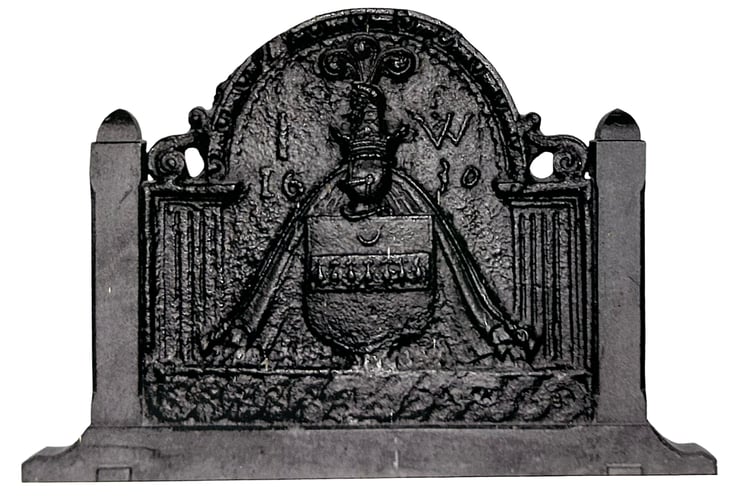
The lead was stripped from the roof, furniture and valuables removed. By Massey’s own account Sir John then conducted a fighting retreat to Chepstow:
“Sir J Winter ran away by the light of the flames, and for hast over ran two of his great gunnes, one demy culverin, one saker, and three brases of iron murderers, which he left behind at Lydney to do a curtesy. Sir John fired all the way he went, till our forces drove them to Chepstow, pursuing him over the bridge.
“Here he remained for a while with 300 men under his command until leaving to join the King at Oxford, whence he was sent to France to join Henrietta Maria at the Royalist court in exile at the chateau of Saint Germain-en-Laye”.
Parliamentary troops advanced to Mitcheldean and on to besiege Hereford, although they abandoned this on 3 September. On 11 September Bristol fell, Berkeley Castle fell on 23 September. Chepstow Castle was besieged in October by Colonel Thomas Morgan and the garrison of 64 men capitulated on the 11th when the walls were breached. The Royalists surrendered Monmouth upon terms on 24 October.
King Charles’s last attempt to create a viable field army ended at the Battle of Stow-on-the-Wold on 26 March 1646.
The Royalist garrison of Sir Henry Lingen in Goodrich Castle surrendered on 31 July.
After the war
The country returned to an uneasy peace and the people of the Forest of Dean could once again go about their business without fear of rapacious garrisons and marauding armies. Wyntour’s estates were confiscated and given, for a time, to his great rival Massey.
Upon the return of Charles II, Sir John Wyntour was restored to his rights and privileges in 1660. Sir Edward Massey eventually took service under Charles II and also benefited from the Restoration.
The Forest may not have been the scene of major battles yet it saw much action.
The full article can be read in the New Regard available from some local outlets or via https://forestofdeanhistory.org.uk
Comments
We've recently changed our login process. If you have an account for commenting, you will need to re-register on the login window.
This article has no comments yet. Be the first to leave a comment.