

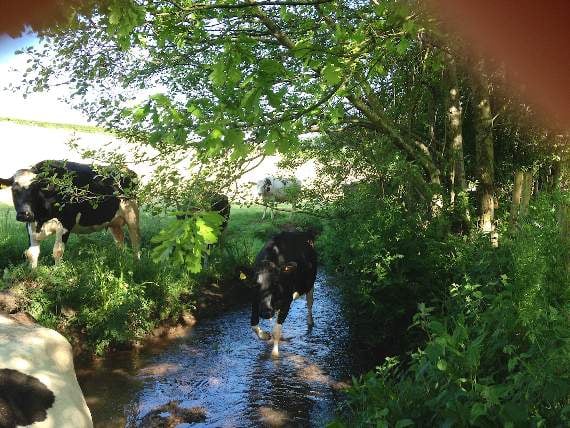
As the long hot summer continues water shortages and hosepipe bans are being discussed by many people. Gardeners, those responsible for sporting facilities and farmers are all avidly following the forecast to see if the rain will provide some much needed water soon.
Hot weather has sparked concerns among British farmers, who are worried about crops ripening too early and the knock-on effects on milk production and winter food supplies for animals.
Robert Davies of Hopes Ash Farm told the Ross Gazette: “I admit that farmers in the UK must be some of the most weather obsessed people on the planet, and renowned for never being happy about it, but I feel we are misunderstood. Farmers are actually natural optimists; why else would we farm when the success of our businesses and the health of our crops and animals relies heavily on something out of our control?
“This year’s hot dry spell is certainly throwing up a few challenges for even the most optimistic amongst us. With the grass not growing livestock farmers like myself are having to let cattle and sheep into fields that would normally be left to make hay or silage to feed them during the winter.


“In addition, we are having to supplement their diet with silage and hay made earlier this year which eats into our feed stocks making feed shortages extremely likely this winter. As long as they can find a shady spot, beef cattle and sheep stand the heat reasonably well, but milking cows can become heat stressed at temperatures as low as 24 degrees, reducing milk yield by around four litres a day. Given the choice the cows soon ditch the bucolic ideal of life outside and head straight back into the shade of the barn.
“Yields from arable crops will also be affected. The unfortunate combination of a late cold spring and the current dry spell has made for a very short growing season. We are likely to be harvesting our barley this week which is about two weeks earlier than normal. Although getting the combine out of the shed is bound to make it rain if nothing else!” he added.
Sarah Faulkner, NFU environment and rural affairs adviser, said: “Herefordshire farmers are used to dealing with the challenges extreme weather can pose but this year has been testing; from an extremely wet winter and spring, to a month where there has been very little rainfall across the county.
“This is another example of the extra volatility food producers are faced with.
“A lack of rainfall has meant poor grass growth for livestock and dairy farmers, and some arable farmers will have seen no recordable rainfall in a key month for their crops.
“Some Ross-on-Wye growers of irrigated crops currently have sufficient access to water to produce our fruit and vegetables but others face restrictions, some will have their own reservoir supplies, but river abstraction is proving challenging on some catchments.
“Our farmers are working hard to ensure business carries on as usual, which means producing the food that feeds the nation.
“The NFU will continue to support its members and its Fodder Bank remains open to help members find animal feed for their farms, or sell any surplus to assist others.
“The union is working closely with the Environment Agency, public water supply companies and Defra to assess the situation for our members as this spell of dry weather continues.”
Parts of the upper River Teme in north Herefordshire completely dried out in the space of just a few days. More than 500 salmon and trout were rescued by the Environment Agency.
An Environment Agency spokesperson, said: “It is normal for river levels to drop during hot weather at this time of year but groundwater and reservoir levels across our region remain normal.
“We are keeping a close eye on river levels and will continue to monitor any environmental impacts and respond where appropriate.
“We will continue to work with water companies to try to minimise the potential impacts to people and the environment.”
Please see www.environmentagency for the latest blog regarding the water situation:
Andrew Nixon, Conservation Manager with the Herefordshire Wildlife Trust said 2018 has been an unusual year for weather in the UK.
He said that the vagaries of the British weather is one of things that makes our climate so interesting and there will always be winners and losers. Species will have their good years and their bad. Generally speaking this shouldn’t be a problem, wildlife has evolved to tolerate these changes and will recover when conditions become favourable.
He said that certain species such as flying insects and bees have been seen in increasing numbers and creatures which feed off flying insects are also benefitting from the hot, dry weather. However, fish and plants which thrive in wetland habitats may be struggling.
Mr Nixon said: “At first it felt like winter would never end as the ‘Beast from the East’ returned time after time to harry our wildlife. Birds struggled to survive late snow falls at a time when they should have been nesting and amphibians remained in hibernation far longer than usual before returning to their ponds.
“When spring finally came it arrived late with many species such as bluebells already weeks behind and having to catch up. More recently it has been the long hot weather that has captured the headlines. that too has had its impacts on wildlife, both positive and negative. Grasses burn off brown leaving them looking dead but they will readily recover when the inevitable rain returns. However, many plants, including trees can often become stressed by prolonged periods of drought leaving them susceptible to diseases. In 1976 numerous beech trees in the Lower Wye Valley gorge died because of the drought and many others were stressed so that they took many years to recover
“When the weather is warm many insects do well; butterflies particularly do not like cool, wet and/or windy conditions. In the hot weather they are far more active and many can complete their life cycle quickly leading to an increase in numbers. Similarly, moths like warm, calm and dry nights and are in very good numbers this year. More generally there are large numbers of flying insects this summer with better numbers of bees and beetles.
“All of this is food for other species such as bats. Sitting out on warm summer evenings at twilight give us fantastic opportunities to see these fascinating nocturnal species. The Common Pipistrelle, a small commonly seen bat around houses and gardens can eat over 3000 insects a night. High insects are therefore welcome. Similarly, we can expect some of our summer visiting birds such as swallows, house martins and swifts to have good breeding success because of the high invertebrate numbers. Other birds such as spotted flycatchers or pied flycatchers, both of which occur in Herefordshire, should also have better breeding success.
“Conversely, some wildlife may struggle in this period of extended dry weather. It will be no surprise that wetland habitats and species often suffer. River flows can become very low and small watercourses might dry out completely causing problems for many species. Fish may become trapped in small pools, increasing competition and making them vulnerable to predation. In hot weather oxygen levels in the water can become dangerously low, sometimes resulting in large numbers of fish asphyxiating as a result. It also causes problem for fish migration; salmon struggle to migrate upstream in low flows and those that do make it up to the headwaters may not breed successfully if the water temperature is too high. Similarly, Small ponds may dry out before amphibians can develop sufficiently. Frogs will frequently breed in shallow temporary water bodies and in dry years these will dry out before tadpoles have metamorphosed.
“Furthermore, our wildlife rich habitats are isolated in increasingly intensively managed landscapes. So, when wildlife suffers from extreme weather it can find it more difficult to bounce back. That is why the Wildlife Trusts work with landowners and communities to support a ‘Living Landscape’ approach to conserve species and habitats across large areas and connect habitats together. To find out more contact Herefordshire Wildlife Trust on 01432 356872 or visit www.herefordshirewt.org
Comments
This article has no comments yet. Be the first to leave a comment.