

.png?width=752&height=500&crop=752:500)
Police have released a digitised image of a man whose body was found in a mid Wales reservoir 16 months ago.
Dyfed-Powys Police has worked with Face Lab at Liverpool John Moores University to produce a realistic image of the man’s face following nearly 16 months of enquiries to establish who he is.
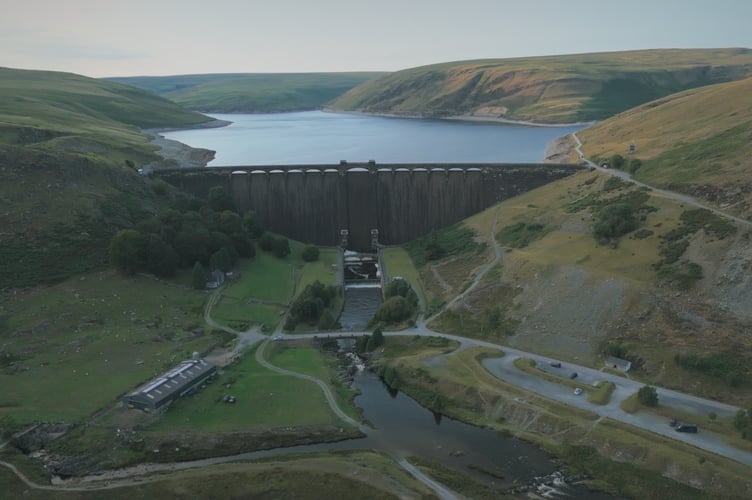
The discovery of a man’s body at Claerwen Reservoir was reported to police by a walker on October 17, 2024.
The unidentified man was wearing a wetsuit, however there were no other items of clothing, jewellery or modes of transport located in the area, and he had no distinguishable marks such as scars or tattoos.


It was estimated that he had been in the water for up to 12 weeks before being found.
The reservoir is in an extremely remote location, deep in the Cambrian Mountains, some 10 miles from the Elan Valley visitor centre in Rhayader and east of Ffair Rhos.
Search teams have combed the barren marshland on foot near to where he was found while a helicopter and drones have searched for any clues on how and why he got there over the last 16 months.
In the months that followed, detectives carried out all possible enquiries to identify the man, with the aim of informing loved ones of his death.
Despite their best efforts, the mystery remains unsolved.
Detective Inspector Anthea Ponting, who has led the investigation, said: “When the discovery was reported to us, we immediately got to work on establishing who this man was.
“In the absence of any personal belongings other than the wetsuit he was wearing, no identification documents or vehicles nearby, we began by working with neighbouring police forces to conduct checks for missing or wanted people who had not been traced.
“When this was unsuccessful, we extended our enquiries to contact all UK forces, ran searches through the Police National Database, and issued bulletins to police overseas through Interpol.
“We have also searched DNA, fingerprint and dental records for potential matches, and issued public and media appeals for information.
“Each time we have reached out to the public, we’ve been provided with some lines of enquiry to follow-up on, but unfortunately none have proven to be the key to finding out who this person is.”
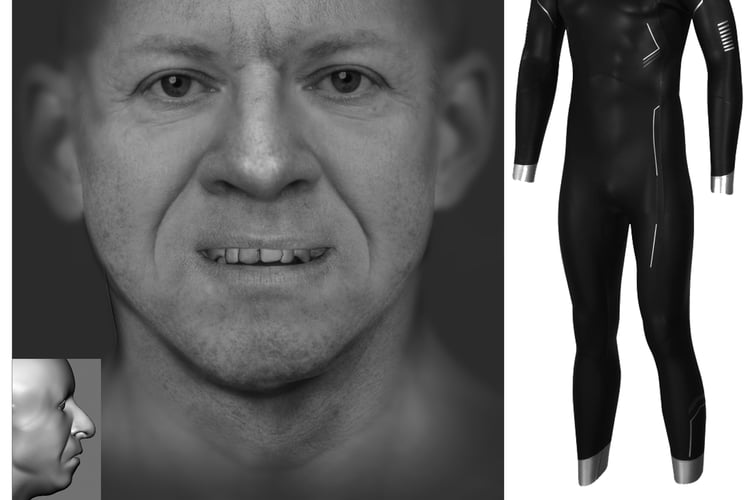
Enquiries so far have allowed the force to issue a written description of the man – who was aged between 30 and 60, around 6ft (1.83m), weighing between 202lbs and 220lbs (91.5kg - 99.5kg), and of white European descent. Officers have now taken a step further in requesting a facial reconstruction from Face Lab at Liverpool John Moores University.
It is hoped that releasing a realistic image might reach someone who can help achieve a breakthrough in the case.
The Face Lab team was provided with photographs, a post-mortem report, forensic dental report and a CT scan of the deceased man in order to produce the facial depiction.
Their work began with data from the CT scan, which was used to create a 3D model using medical imaging software. Next, they used the dental report and images to create the shape of the man’s lower face and mouth, identifying that he had protruding teeth and a left-sided cross bite.
Following this, the shape of the man’s face, lips and nose were estimated with the addition of muscles to the model. It was established that he had a rounded chin and square jawline, with a downturned nose.
Once the 3D reconstruction was complete, Face Lab used photographic references – according to sex, age and features – to create a series of layers. Textures were added to the face model to create a realistic appearance, with blurring around the edges of the face where there was less certainty around the man’s features.
DI Ponting said: “Until now, the only item available to progress our investigation was the wetsuit the man was wearing, which provided us with limited information around his height and weight.
“Thanks to Face Lab, we have now been provided with a very clear and detailed estimation of what the man could have looked like, which I sincerely hope will result in some positive information coming forward.
“The image has already been processed through the Police National Computer for any matches, and has been shared with Interpol, and we are once again asking the public for their assistance.
“We believe this is the best chance to identify the male as this image can be distributed throughout the UK and abroad in our efforts to identify him.
“I urge anyone who thinks they might recognise him to come forward This is someone’s family member – someone’s loved one – and I would like nothing more than to return him to his loved ones who might be missing him.”
Director of Face Lab at Liverpool John Moores University, Professor Caroline Wilkinson, added: “Face Lab works with police forces from around the world and facial depiction from human remains can act as a tool for recognition, providing new lines of investigation in relation to identity.
“Hopefully, someone who knew this man will now recognise his face and our facial depiction can support the police to finally identify him.”
Speaking last year, DI Ponting said: “This is a highly unusual situation, that a year after a person has been found deceased we have not been able to positively identify them.
“This is someone’s son, possibly someone’s partner, brother or father, and we would like to be able to return them to any family or loved ones who might be missing them.”
If you visited Claerwen Reservoir between July and October 18, 2024, and saw anything that might help enquiries, or you are aware of someone who has not been seen for some time and matches the description above, contact Dyfed-Powys Police in one of the following ways.
A dedicated webpage has been set up for people to submit any information at: https://mipp.police.uk/operation/6324A15-PO1
Alternatively, people can email: [email protected] or call 101.
Comments
This article has no comments yet. Be the first to leave a comment.