

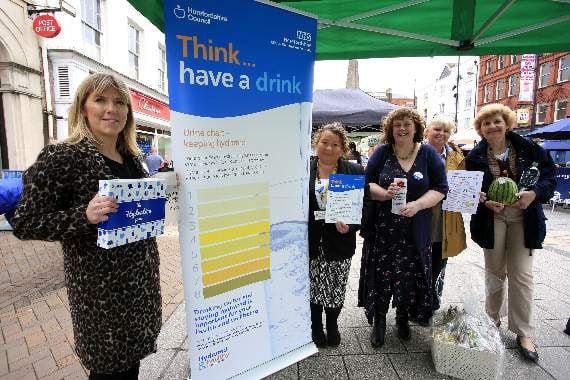
Local health and care services have launched a campaign reminding residents to stay hydrated to support their health and wellbeing.
With the summer holidays just around the corner and warmer weather predicted, even temperatures above twenty degrees can see vulnerable people, including children, the elderly and people with long term conditions, becoming dehydrated.
Karen Wright, Director of Public Health Herefordshire, said: “Every year people become seriously unwell as a result of dehydration and are admitted to hospital. Vulnerable groups such as the elderly, babies, children and people with long term health conditions are most at risk and they need to drink more water than usual, even if they do not feel thirsty.
“To stay hydrated adults should aim to drink approximately six to eight 200ml glasses of water a day and drink more fluids during warmer weather or when exercising. Using measured water bottles can help people keep track of what they are drinking. Alcohol and drinks with caffeine such as coffee are not as good at keeping people hydrated.


“The fluids intake for infants and children varies according to their age and other factors, so we advise that parents and carers ensure infants and children are offered regular fluids throughout the day”.
Lisa Pritchard, Wye Valley NHS Trust Dietetic Assistant, added: “Together, we’re reminding health and care staff in hospitals, the community and care/nursing homes to watch out for signs of patient dehydration, and make sure to offer patients and residents a drink regularly throughout the day.
“We have a number of measures in place in our hospitals to monitor and encourage patients to drink plenty of fluid, such as different cups/glasses for those who struggle to drink and individual patient fluid balance charts to monitor fluid intake”.
Helen Richardson, Chief Nursing Officer at Herefordshire Clinical Commissioning Group, said: “Dehydration can make you feel very unwell. It can affect anyone, particularly those who are older in age, have other health conditions or the very young. If you suspect that someone is dehydrated ensure they are drinking enough fluids and if they are being sick or have diarrhoea, contact your GP or call NHS111.
Comments
This article has no comments yet. Be the first to leave a comment.