

This last week has seen thousands of people across the country get moving, not only to raise awareness of Multiple Sclerosis (and their Move it for MS campaign), but to encourage more people who live with the condition to get active.
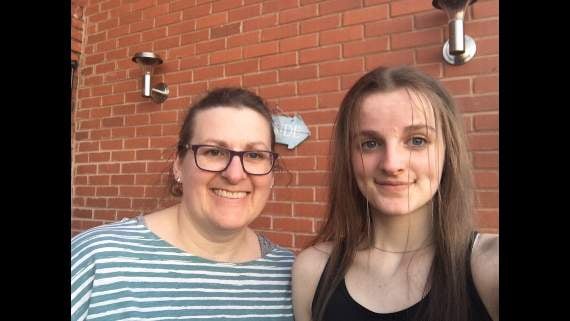
Ross-on-Wye mum, Amanda Phillips, who was diagnosed with Multiple Sclerosis (MS) three years ago discovered the gym has not only helped build her strength, it increased family bonds.
Amanda Phillips hadn’t, she confesses, attended a gym for years, and signing up was the last bit of advice she expected from her physio. But living with MS she was finding herself exhausted at the end of the day. “I couldn’t even manage to go for a walk with my dog when I got home,” says Amanda, who lives and works in Ross.
Multiple Sclerosis is a condition affecting some 100,000 people in the UK (three times more women than men), impacting on their brain and spinal cord and damaging the coating of nerves.



“The physio thought exercise would help build my core strength, and strength in my legs,” says Amanda who says she wasn’t keen on the idea of working out alongside slim gymbies, and didn’t feel ready to sign up to the specialist MS class. But there were surprises waiting for her at Halo’s Pool and Leisure Centre on Kyrle Street.
“I went in wondering if everyone would notice I’m overweight, or if I’d only managed three minutes on the cross trainer, or 10 minutes walking on the treadmill, or how after half an hour I would sit down and read a book while my husband or daughter finished their workout.
“But no, they didn’t notice,” says Amanda. “There are all ages, sizes, shapes and abilities at the gym and they are all there to work out at their own pace for their own reasons. But I was even more surprised by how much the staff at my leisure centre knew about MS. They knew the language of the condition, and its impacts, and devised a routine for the gym and some exercises I could do at home when I wasn’t up to coming in,” says Amanda. “They’ve taught me techniques to reduce pain, like easier ways to get up when I am kneeling or lying down, and they’ve understood that it isn’t something that just affects you physically but emotionally too. They understand what I am feeling and are so supportive. If I can only manage a short burst on the machines, there is never any pressure. If I forget how to work them - which I do - they just take me through it again.”
But one of the best things about Amanda’s new fitness regime is she’s been able to share it with her 15 year old daughter, Isobel.
“Isobel helps me with the machines and understands where I am at. I don’t look like I have a disability. I don’t walk with a stick. But she knows what I need. When we’re out shopping together she always finds a changing room with a chair, or knows I’ll need regular stops. Without being asked she’ll come over in the gym and help me put my foot in a stirrup as I struggle with movement in my feet. Without my MS we might have not done this together, or had this understanding, but working out here has brought us even closer.”
Comments
This article has no comments yet. Be the first to leave a comment.