

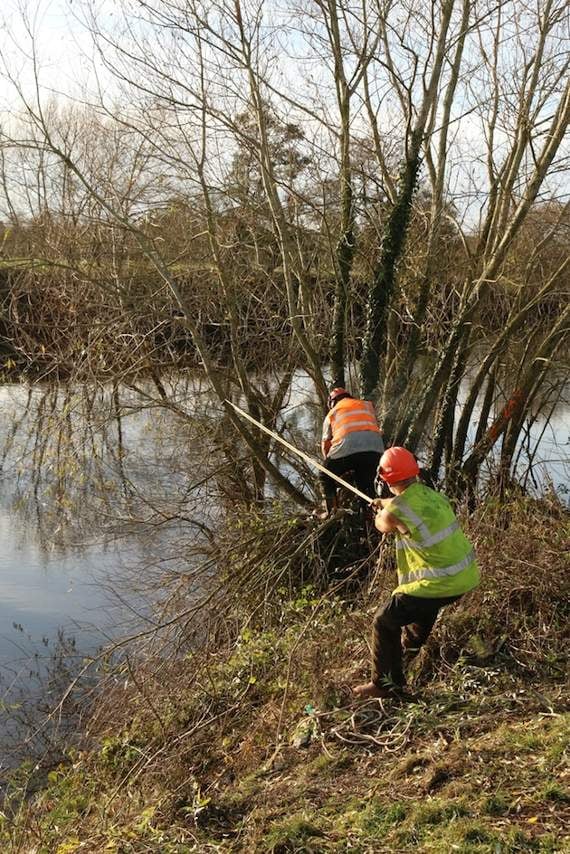
A partnership between Ross-on-Wye Town Council, Natural England and the Wye Valley AONB Unit has been undertaking work to manage the riverside in Ross to encourage biodiversity and improve riverside views. This is part of a programme of tree management to help create better habitats for a variety of flora and fauna along the river.
Members of the Ross Town Council are keen to let residents know just how much work is being done to ensure that the riverside area is an attractive part of Ross - which can be maintained, while also protecting and preserving wildlife.
Nick Critchley, Development Officer at Wye Valley AONB told the Ross Gazette: “Trees are being pollarded and coppiced to improve the age structure of riverside trees, providing a good habitat for a variety of species. This also creates views of the river, and light and shade on the river and along the river bank. Shade helps to maintain beneficially high oxygen levels in the water, whilst adequate light means the growth of aquatic plants is not inhibited.
“Pollarding, coppicing and pleaching are traditional woodland skills. Pollarding is a form of tree management which encourages vigorous fresh growth from where the tree is cut, above the height of grazing animals. It helps to prolong the life of trees by stimulating growth and reducing the weight of the tree so it is less likely to split or fall. Willow trees respond well to this management and fresh growth will soon appear next year.


“Coppicing is where trees are cut down at their base to encourage growth of new stems. It creates a sustainable timber supply for future generations. Some of the Alder trees along the river bank in Ross show signs of the disease Phytophthora and, if left unmanaged, these trees would die. Coppiced trees are less likely to be affected by the disease when the regrowth starts next spring.
“Some of the Willow trees are being ‘pleached,’ where the tree is ‘hinged’ at its base and laid along the river bank. This is an innovative form of riverbank management. The tree will continue to grow, and the vegetation in the water will create habitat for aquatic animals. The branches will slow down the flow of water, creating ‘slack’ water. This slower flowing water will provide habitat for fish to shelter in.
“Pollarding and coppicing have been undertaken on the flood plains of the River Wye for many centuries, particularly at Ross. The town had a thriving basket making industry, which relied on the new growth of the coppiced willow trees lining the river. A blue plaque on the Hope and Anchor pub remembers this part of the town’s history.
“The River Wye is protected as a Site of Special Scientific Interest (SSSI) and a Special Area of Conservation (SAC) because it is an important migration route, wildlife corridor and breeding area for many nationally and internationally important species.”
Comments
This article has no comments yet. Be the first to leave a comment.