
SIX major headaches have been revealed in a report on the first phase of the county city’s bypass, on which work is due to begin by the end of the year.
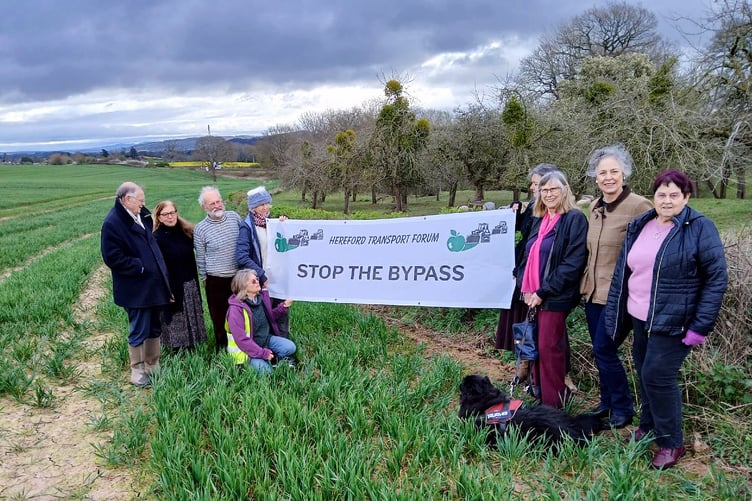
The Hereford scheme has already run into opposition from landowners, residents who could be affected, and environmental campaigners, notwithstanding its aim of relieving heavy traffic congestion and air pollution from vehicles having to travel through the city centre.
Ahead of a meeting of Herefordshire Council’s ruling Cabinet on Thursday, September 24, officials’ Western Bypass Phase One Update Report makes some stark warnings:
- The council “has received confirmation from the remaining landowner that they do not wish to negotiate with the council any further”. This appears to be homeowner at the western end of the route and bypass opponent Jean Harris.
- As a result, the council’s option of a Compulsory Purchase Order (CPO) “must now continue to ensure that all necessary ownership rights are obtained”. But the final decision on this by the Secretary of State could take 12-18 months.
- There is also an outstanding need for some seasonal pre-construction works including ecology surveys, pushing back the time for vegetation clearing and fencing, and preventing construction there before May 2027.
- Running from the A465 round to the A49 southwest of Hereford, and intended ultimately to replace the A49, a National Highway, through the city, the proposed stretch of road will also pass over the Hereford-Abergavenny railway line. But recent changes to national road and bridge standards have required alterations to the bypass design, which will add to the delay and total cost.
- “Value engineering” proposals to bring down the cost of the project are “not achievable” as the need to revise new and existing planning permissions “would erode the savings being sought”.
- Meanwhile the project faces “significant construction inflation” due to global factors, while any deal must be “within the agreed governance and budget”.



The report also reveals that the council has already spent £4m, nearly a tenth of its total budget.
Comments
This article has no comments yet. Be the first to leave a comment.