

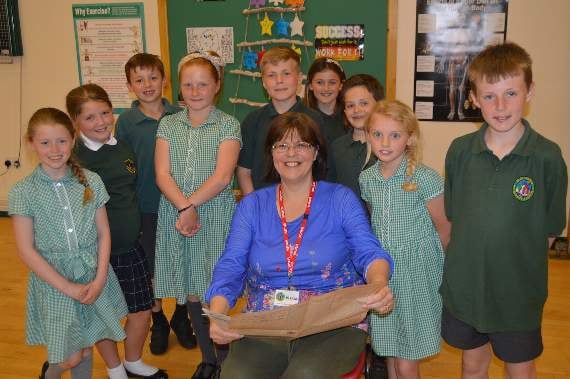
Pupils at Walford School are one of the groups taking part in the project to celebrate and preserve the Ross Gazette’s archive which was recently awarded National Lottery funding.
Being granted the award means that it will be possible to digitise every issue of the Ross Gazette, meaning that more than 150 years of local history will be available for the public to access through Herefordshire’s library service.
The project will also include an intergenerational reminiscence initiative, primary school learning programme, film project, and work with local history groups, to involve the local community and incorporate their stories into the archive. Material gathered during the project will be used as the foundation for several exhibitions on the key themes of childhood, tourism and the river, the coming of the railway, and wartime Ross.
And this is why the editor of the Ross Gazette, Jo Scrivin, recently paid a visit to Walford School to talk to the pupils about the newspaper and its history. Jo explained that, as part of the project, Walford pupils will become reporters, finding out about what school was like from their parents and grandparents, especially those who attended Walford School.




They will interview their friends and relatives, as well as the people they meet at the Walford Community lunches. They will then use the material they gather through these interviews to create short films which will be shown at exhibitions as part of the Archive Project.
Jo gave them a few tips on how to interview people, and then the children were able to ask questions about her school days.
The award of £70,600 was made by the Heritage Lottery Fund (HLF) to the Ross Gazette Archive Project ito fund the digitisation of the entire newspaper archive and accompanying photographs, making it available for the public to access. The project is made possible by money raised by National Lottery players
The digital archive will be available on Herefordshire library service’s Herefordshire History project website (www.herefordshirehistory.org.uk), making it accessible to a much wider audience and preserving it for future generations.
Comments
This article has no comments yet. Be the first to leave a comment.