

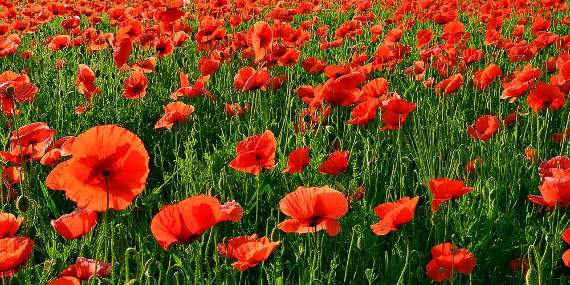
THE First World War finally ended on the 11th hour of the 11th day of the 11th month of 1918 with the signing of the Armistice. The guns of the Western Front fell silent after more than four years continuous warfare.
To this day at 11am on November 11th many people across Britain stay silent for two minutes to think about those who died, in the World Wars and also in other conflicts such as those in Iraq and Afghanistan. During this time many people also wear a red poppy in memory of those who sacrificed their lives for us.
John McCrae, a Canadian doctor and teacher is best known for his memorial poem ‘In Flanders Fields,’. In April 1915, McCrae was stationed in the trenches near Ypres, Belgium, in an area known as Flanders, during the bloody Second Battle of Ypres. In the midst of the tragic warfare, McCrae’s friend, 22-year-old Lieutenant Alexis Helmer, was killed by artillery fire and buried in a makeshift grave.
The following day, McCrae, after seeing the field of graves blooming with wild poppies, wrote his famous poem.

.jpeg?width=209&height=140&crop=209:145,smart&quality=75)


In Flanders Field became popular almost immediately, it was translated into other languages and used on billboards advertising Victory Loan Bonds in Canada. The poppy soon became known as the flower of Remembrance for the men and women in Britain, France, the United States, and Canada who have died in the service of their country. Today, McCrae’s poem continues to be an important part of Remembrance Day celebrations.
In Flanders Fields
In Flanders Fields the poppies blow
Between the crosses, row on row,
That mark our place, and in the sky,
The larks, still bravely singing, fly,
Scarce heard amid the guns below.
We are the dead; short days ago
We lived, felt dawn, saw sunset glow,
Loved and were loved, and now we lie
In Flanders fields.
Take up our quarrel with the foe!
To you from failing hands we throw
The torch; be yours to hold it high!
If ye break faith with us who die
We shall not sleep, though poppies grow
In Flanders Fields.
Comments
This article has no comments yet. Be the first to leave a comment.