

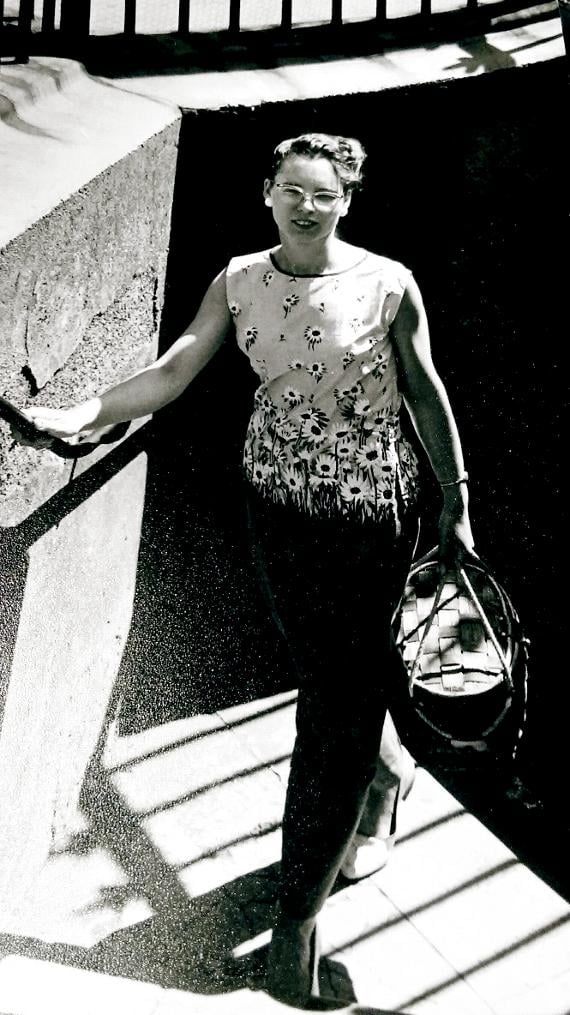
A warm, late summer afternoon at Brighterkinds Ross Court spent discussing the way fashion has changed during the resident’s lifetimes provoked many memories, including a discussion about the merits of a knitted swim suit.




With the help of Iris Price, and an extensive range of clothes from each of the decades, it seemed only fitting to organise a fashion show. Kay Cripwell, Manager of Edinburgh Woollen Mill provided clothes from the current era and compéred the evening. Joyce Thomas, dressed in a beautiful, original 1930s dress joined Manager, Janet Auty and residents for a wonderful opportunity to look back at those incredible changes in fashion from the 1920s to the 1960s.
At the end of World War I women were enjoying a new freedom, skirts became straighter and shorter, revealing the knees, the shortest length so far in history. Hemlines were reflecting the changes in society, a levelling of the classes, a decrease in formality and, most importantly for women, a move towards emancipation. Fashion saw the waist line disappear, bust lines abolished and a shorter straighter silhouette appear, hairstyles followed the trend showing a more masculine move towards the bob.
The flapper revolution started in the early twenties when dresses were still long. The short, slinky, flapper look was in full style by 1925. Many flapper dresses were covered in beads or beaded fringe. The movement of some fringe or tiers of chiffon made dresses swish and jingle while dancing the Charleston. Dresses that made a sound as they moved attracted the attention a flapper desired.
One Ross Court resident, Betty Lewis, born in 1917 clearly remembers her father being very strict with her and her sister during the 1920s, especially when it came to fashion. “I remember Father staring at my sister’s knees whilst sitting at the table, she asked him why he was looking at her legs? He replied that they should not be on show. This resulted in my sister and I leaving home each day in longer skirts and changing in the nearby apple orchard into shorter skirts which showed off our knees, occasionally we even added a band with bells on to our legs to attract attention.”
Another resident, Avril Lansdell who has written many books, including one entitled ‘Seaside Fashions’ said that “in the 1920s and 1930s for the first time in history it became fashionable to expose the body to the sun, and to flaunt both it and tanned skin. In respect of bathing costumes throughout this time there was an increase in the amount of skin exposed and a decrease in the amount of fabric used."See the full story in this week’s edition of the Ross Gazette, or subscribe to our online edition here
Comments
This article has no comments yet. Be the first to leave a comment.