

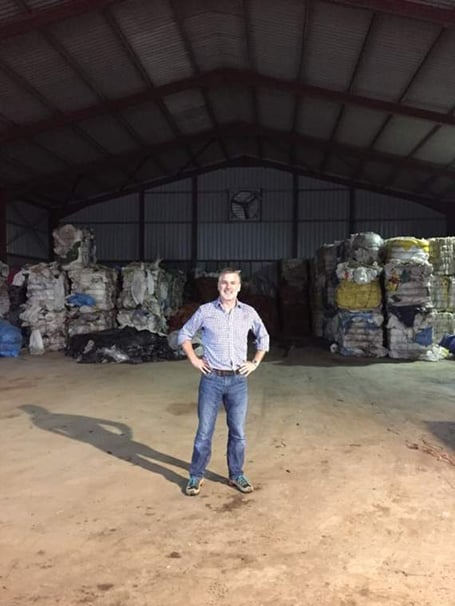
Anouk Skurek grew up in Ross-on-Wye and her business based a few miles away, at a farm in Newent, is helping many local farmers comply with the legislation around getting rid of their waste.
Farms generate huge amounts of plastic and cardboard, fertiliser bags, feed sacks, even silage wrap, which all has to be disposed of. Farmers have a legal duty to remove their agricultural waste, either through a recycling facility or to costly landfill, as burning or burying their waste is no longer an option.
When Anouk and Steve Skurek set up their business more than 12 years ago they brokered deals between companies in the Far East, who were looking to buy waste products, and companies who had waste to sell.
Now the Skureks no longer buy the rubbish but offer a free service to farmers who would otherwise have to pay to get rid of their waste.

Anouk told the Ross Gazette that it can cost farmers a lot of money to use skips or waste collection services. She said:?“I have no idea how much we have saved farmers in the Ross-on-Wye area but it must be a lot.”
Anouk added:?“We have cut out the middle men, when we were brokers we only saw the waste when it was being loaded, now we are not just office-based but get to meet many of the farmers.
“There are lots of farmers in the Ross area who use us and we hope there will be more,” she added. “Some people bring huge loads as well as smallholders who bring stuff in their car or trailer, there is no minimum amount.”
Rural Waste Recycling supplies all the paperwork farmers need to show that they comply with legislation. When the farmers arrive they go over a weighbridge, then unload the waste which is bailed. When the farmer leaves he is given a copy of the waste transfer notice with the all the information they need.
To benefit from the service Rural Waste Recycling offers, farmers have to deliver their segregated waste to the recycling facility in Newent.
All the company asks is that they call to register and book a time to ‘drop off’ the segregated waste plastics and dry card.
This is because when containers are being loaded it can take several hours and with a pre-booked slot farmers can be in and out in as little as ten minutes.
The material is shipped to processing plants in the UK and abroad, then is brought back to this country as plastic decking, wheely bins, traffic cones, even fleece jackets.
Anouk and Steve were in Dusseldorf last week at a plastic exhibition looking for new customers for different kinds of waste. To see a full list of the different types of waste they take in for free recycling visit www.ruralwasterecycling.co.uk
Comments
This article has no comments yet. Be the first to leave a comment.